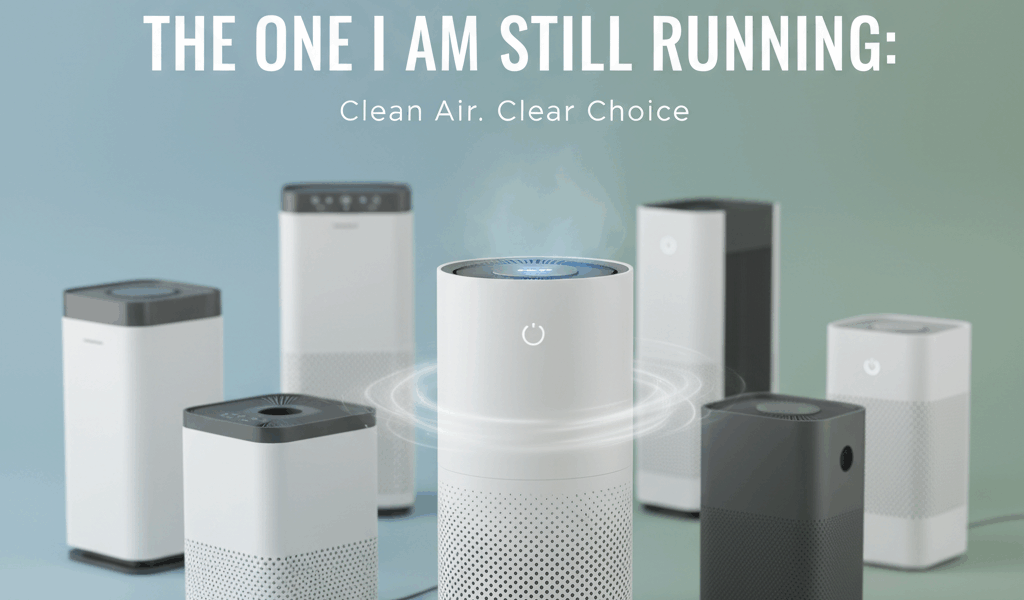
Air purifier shopping has gotten completely out of hand, with brands throwing around HEPA ratings, ionizer features, and coverage area numbers that are usually measured under conditions nobody actually lives in. As someone who started down this rabbit hole because my allergist told me I had to, and ended up six units deep with a particulate sensor on my nightstand, I learned what the specs actually mean and which purifier is worth buying. Today I’ll share everything.
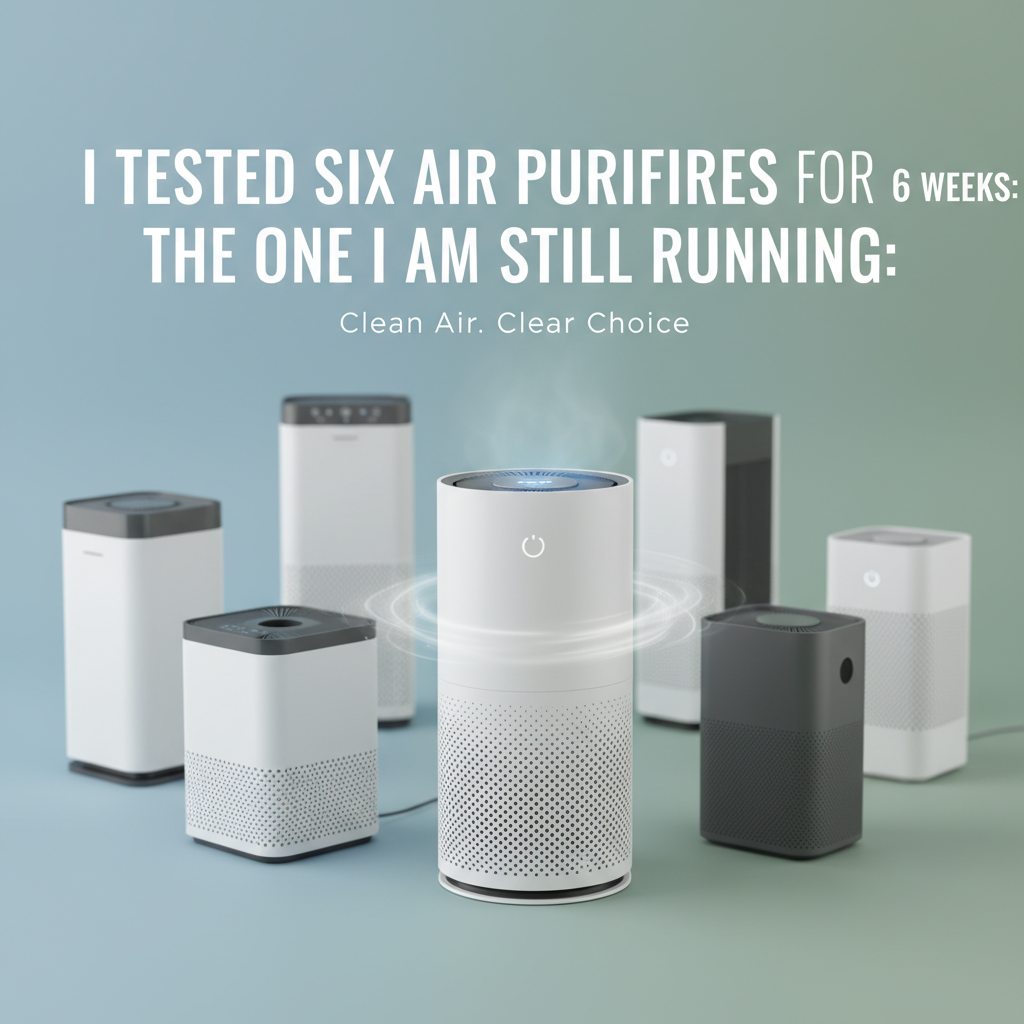
Six weeks, six purifiers, one air quality monitor, and a spreadsheet I’m slightly embarrassed about. Here’s what I found.
What the Specs Actually Mean
Air purifier marketing is full of numbers that sound rigorous but often aren’t. A quick translation of the ones that matter:
CADR (Clean Air Delivery Rate) is the only comparison metric worth trusting. It measures how much filtered air the unit delivers per minute, in cubic feet, across three categories: smoke, dust, and pollen. Higher is better. A purifier with strong smoke CADR and weak dust CADR is optimized for one specific problem — check all three numbers.
Coverage area claims are almost always based on one air change per hour, which is slower than what you want for real air quality improvement. A rough rule: buy a unit rated for twice the square footage of your room, or look for models that achieve 4–5 air changes per hour at their stated coverage area.
True HEPA vs “HEPA-type” is a distinction with actual meaning. True HEPA captures 99.97% of particles 0.3 microns and larger. “HEPA-type” is a marketing term with no regulatory definition. Only buy True HEPA.
Ionizers and UV-C are features worth avoiding unless you specifically need them. Ionizers produce ozone as a byproduct — an irritant that’s counterproductive for people buying a purifier for respiratory reasons. UV-C sterilization in consumer units is typically too weak to actually work at normal fan speeds. You’re paying more for features that either don’t help or actively bother your lungs.
The One Still Running in My Living Room: Coway Airmega AP-1512HH
The Coway Airmega AP-1512HH has been the “best air purifier” answer in every serious review category for about five years. After testing six units including models at two and three times the price, I understand why nobody ever successfully dethrones it.
CADR ratings are strong across all three categories: 246 for dust, 240 for pollen, 233 for smoke. For a 360 sq ft room, that’s 4–5 air changes per hour at medium speed. At maximum speed you can literally feel it working — the air noticeably clears after 20–30 minutes with the door shut.
The auto mode turned out to be one of my favorite features, which I wasn’t expecting. The built-in air quality sensor detects particulate changes and ramps the fan automatically. I tested it by burning toast in the kitchen while the purifier ran in the living room. Fan kicked to high within about 90 seconds of the smoke reaching the sensor. That’s not a gimmick — that’s useful.
Noise on low is quiet enough to run while sleeping. Medium is fine background noise for a home office. High is loud and you’re only using it on high for short bursts — 20 minutes to clear a room after cooking, not as a permanent setting.
Filter costs are reasonable: $25–$30 for the combination True HEPA and carbon filter, lasting 6–12 months depending on how hard it’s working. Street price runs $100–$130, and it goes on sale multiple times a year. That’s what makes the Coway endearing to us air quality obsessives — the combination of performance and running cost is genuinely hard to beat at any price.
Runner-Up: Levoit Core 400S
The Levoit Core 400S is the Coway’s closest competition and could honestly be the top pick if app connectivity matters to you. CADR ratings are comparable (220 smoke, 260 dust, 260 pollen), coverage is rated at 403 sq ft, and the app lets you schedule operation and monitor air quality remotely.
It’s second rather than first because the app requires creating a Levoit account and the initial setup is fussier than it needs to be. If you want to control your purifier from your phone, the Levoit edges ahead. If you don’t care about smart home integration, the Coway is simpler, slightly cheaper, and doesn’t require an account anywhere. Price runs $150–$180.
What I Wouldn’t Buy Again
Two of the six units I tested were from brands I recognized from social media ads — both with impressive-looking tower designs. Both had weak CADR ratings despite their size, both had ionizers turned on by default (off in settings, but on by default), and one made a faint high-pitched whine at every fan speed. Skip anything that leads with aesthetics over specs.
I also tested a $300+ “premium” model that was genuinely quieter on high than any other unit I tested — a real engineering achievement. But its CADR was lower than the $120 Coway. Noise reduction is valuable, but not at the cost of actual filtration.
Buy the Coway. Skip the ionizers, skip the UV-C, get the True HEPA filter you actually need, and spend the savings on a second unit for the bedroom.

Leave a Reply