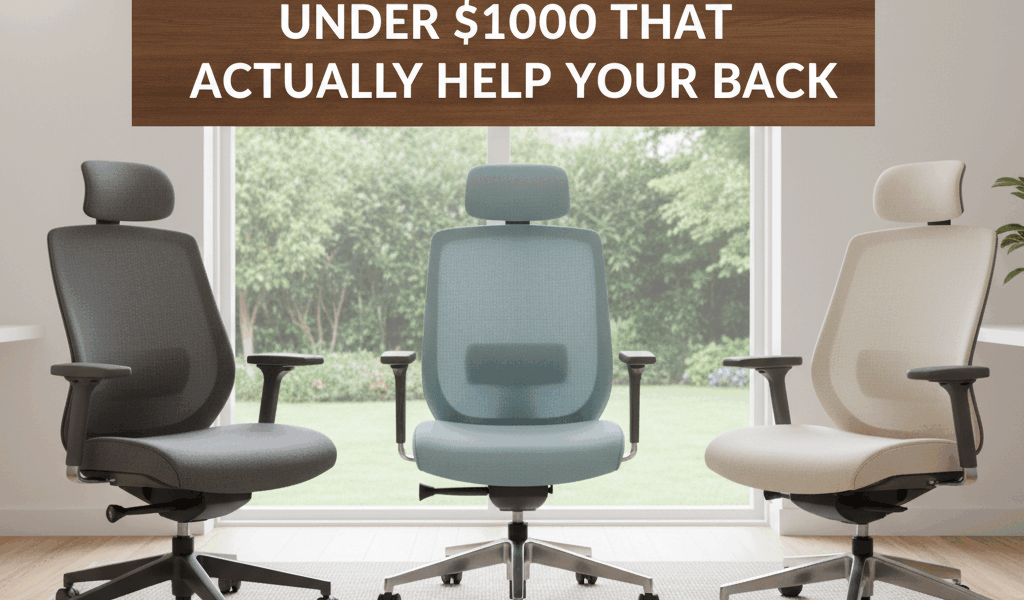
Ergonomic chair shopping has gotten unnecessarily complicated, with every recommendation either landing at $1,500 or pointing at generic chairs that use the word “ergonomic” as decoration. As someone who spent two years with chronic lower back pain before actually fixing the problem, I learned which features matter and which ones are just adjustable knobs that don’t actually adjust anything useful. Today I’ll share all of it.
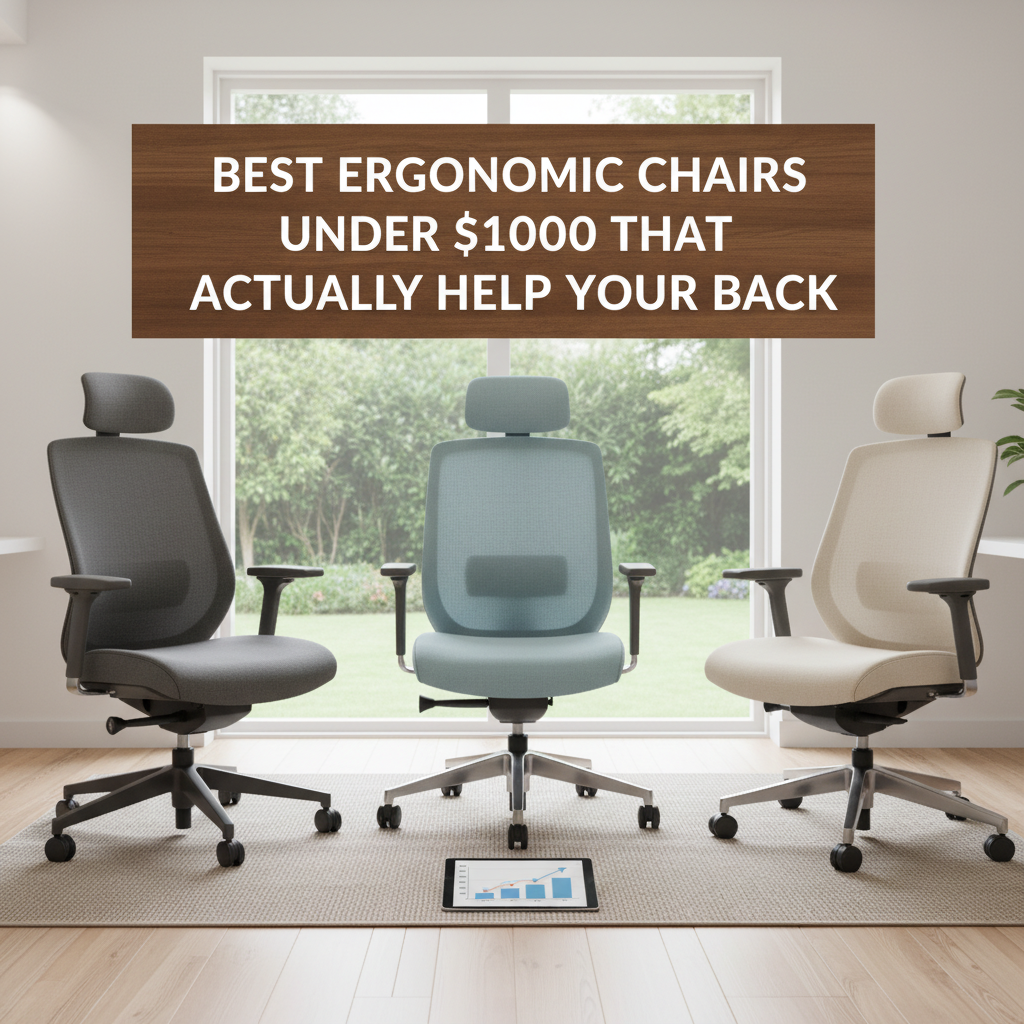
Herman Miller and Steelcase make genuinely excellent furniture. They also cost more than some people’s first cars. The good news: the ergonomics research that makes those chairs work isn’t proprietary, and the features that matter can be found under $400.
The Features That Actually Matter
Adjustable lumbar support. Not fixed lumbar support — adjustable. Fixed lumbar support is designed for one body shape and helps everyone else approximately not at all. You want to move it up and down (and ideally in and out) to match where your natural spinal curve sits when you’re seated upright. If a chair’s lumbar support doesn’t move meaningfully, it’s decorative.
Seat depth adjustment. Most people skip this setting and pay for it later. When your seat depth is right, you can sit fully back against the lumbar support with 2–3 finger-widths of space between the seat edge and the back of your knee. Too deep and you either perch on the front edge or slump back — neither position is good for more than an hour.
4D armrests. Armrests should support your elbows when your shoulders are relaxed, not when they’re raised. Height, width, depth, and rotation adjustability (what the industry calls 4D) is worth the upgrade cost. Fixed armrests that don’t match your actual desk height can actively cause shoulder and neck tension.
Tilt with recline lock. Sitting bolt upright at 90° increases spinal compression compared to a slight recline. Being able to lock at 100–110° and actually stay there during a long session matters more than most people realize until they’ve tried it.
Best Under $400: Branch Ergonomic Chair
The Branch Ergonomic Chair at $329 checks every box on that list. Lumbar support adjusts both height and depth. Seat depth adjusts. The 4D armrests have more range of motion than chairs at twice the price. Tilt tension is smooth and the recline locks at multiple positions.
The mesh back is breathable enough to sit in for two hours without becoming uncomfortable. Build quality feels solid — no wobble, no plastic that sounds like it’s about to crack. Branch offers 30-day returns and free shipping, which matters when you’re buying a chair you can’t sit in first.
It’s not a Herman Miller Aeron. The mesh isn’t as refined, the mechanisms aren’t as precise, the warranty is 10 years limited versus Herman Miller’s 12-year full. But for under $400 it’s closer to that experience than anything else I’ve spent real time in. That’s what makes it endearing to people in this price range — you’re getting the functional benefits without the premium materials premium.
Runner-Up: Autonomous ErgoChair Pro
The Autonomous ErgoChair Pro lists around $499 but goes on sale regularly for $299–$349, which is when it becomes the best value in the category. Full-mesh design, adjustable lumbar, adjustable headrest (genuinely rare under $500), and a tilt system that reclines comfortably.
The seat depth adjustment mechanism is slightly awkward to operate once you’ve found your setting — which is why it’s runner-up rather than top pick. But the headrest and full-mesh design are real advantages for people sitting long sessions who want neck support.
Best Under $250: Sihoo M57
If $300+ isn’t the budget, the Sihoo M57 at $200–$230 is the one I’d recommend. Armrests are height-only (not 4D), and the build isn’t as refined as the Branch or Autonomous — but the lumbar support is legitimately adjustable, the seat is comfortable for the price, and it’s a different category of product from the $100–$150 generic chairs that use similar visual design but have lumbar “adjustment” that moves about half an inch.
The Chair Isn’t the Whole Answer
Even the best chair won’t fix a desk at the wrong height. Elbows should form roughly a 90° angle when your hands are on the keyboard, feet flat on the floor. If you’re reaching up to type all day, no lumbar setting resolves that shoulder tension. A monitor arm at eye level and keyboard tray at the right height solves more than the chair alone ever will.
Branch Ergonomic Chair at $329 is the clearest recommendation. If you catch the Autonomous on sale under $349, get that instead. Budget buyers: Sihoo M57 beats everything at its price point.



Leave a Reply