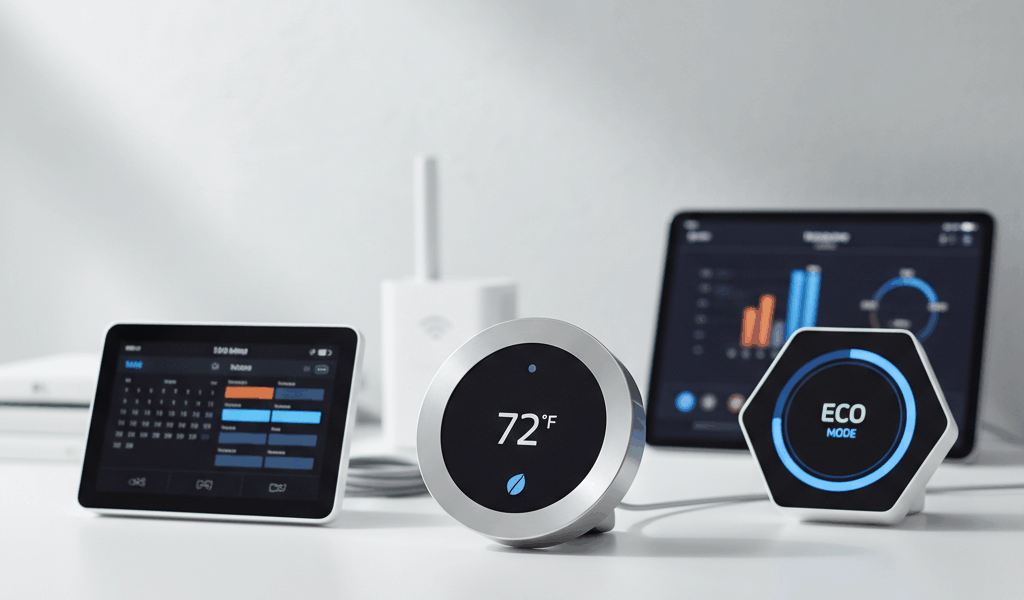
Smart Thermostats That Learn Your Schedule and Cut Energy Bills
Smart thermostats are the kind of thing nobody warns you about with all the learning algorithms and eco features flying around. As someone who tested four different smart thermostats in my own home over three years, I learned everything there is to know about what actually saves money versus what’s marketing fluff. Today, I will share it all with you.

Old programmable thermostats expected you to manually set schedules—which nobody did consistently. Smart thermostats track when you’re actually home, when you sleep, and what temperatures you like. After a week or two, they build optimized schedules without you doing anything.
Geofencing Changes Everything
Stopping for a sec — this is the key bit. The most impactful feature uses your phone’s location to know when everyone leaves. System automatically enters energy-saving mode. When someone approaches home, it starts heating or cooling so you arrive to comfortable temperatures.
This simple automation eliminates the most common energy waste. Forgetting to turn things down before leaving? That’s what makes geofencing endearing to us forgetful people—it handles the forgetting for you.
Room Sensors Solve Hot and Cold Spots
Single-point sensing creates problems in multi-story homes. Your main thermostat might read 72 while upstairs bedrooms hit 78. Remote sensors placed where you actually spend time provide accurate readings where they matter.
Advanced systems prioritize rooms based on occupancy and time. Living room sensor matters during evening hours; bedroom comfort takes priority overnight. Targeted approach maintains comfort where you actually are.

Energy Reports Reveal Savings
Monthly reports compare your consumption to efficient homes in your area. These insights motivate conservation and confirm whether your smart thermostat actually delivers promised savings. Nice to have proof.
Detailed runtime logs show exactly when your HVAC runs. Unusual patterns might indicate maintenance needs before small problems become expensive repairs.
Installation Considerations
Most homeowners can install these in under an hour. However, older homes lacking a C-wire may need professional help or specific thermostat models designed for two-wire systems. Check before you buy.
Compatibility checkers on manufacturer websites confirm whether your existing wiring works with specific models. Running this check before purchasing prevents frustrating returns.
Typical smart thermostats cost $150-300 and save 10-15% on heating and cooling bills. Most households recover their investment within two years while enjoying improved comfort immediately.


Leave a Reply