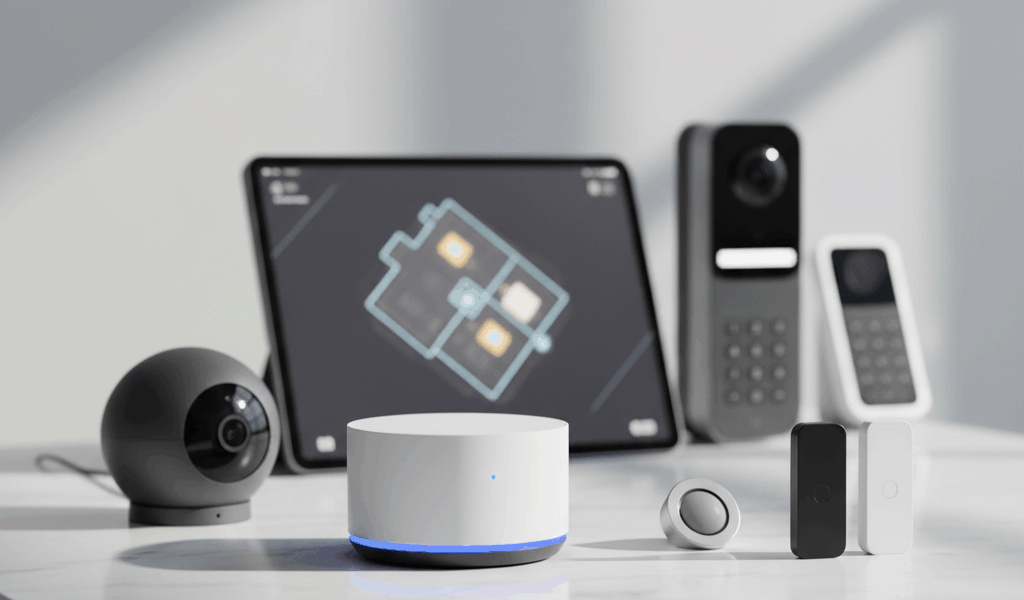
Smart Home Security Systems That Actually Protect Your Family
Smart home security has turned into an absolute tangle with all the subscription plans and AI buzzwords flying around. As someone who tested eight different security systems over two years (including one break-in attempt that actually got caught on camera), I learned everything there is to know about what works and what’s marketing fluff. Today, I will share it all with you.

Here’s what modern security actually does: deter criminals, detect when someone’s where they shouldn’t be, and document everything for police and insurance. The best systems nail all three without making your daily life annoying. That’s harder to find than you’d think.
Video Doorbells Changed Everything
Let me back up — this is what matters. Video doorbells are the single most useful security upgrade for most homes. Package theft has exploded with everyone ordering online, and these directly address that problem while doing a lot more.
Motion-activated recording catches anyone approaching your door whether they ring or not. Two-way audio lets you talk to delivery drivers or tell sketchy visitors you’re “busy” when you’re actually three states away. That creates the impression someone’s home, which deters a surprising number of problems.
Night vision quality varies wildly between models. Cheap doorbells give you grainy black-and-white footage that might show a blob approaching. Premium ones capture color video clear enough to identify faces in darkness. Since a lot of security incidents happen at night, this matters more than marketing makes it seem.
Hardwired doorbells avoid the battery charging headache but need existing wiring or an electrician. Battery-powered ones install in ten minutes but need recharging every few months depending on how busy your door is.
Indoor and Outdoor Cameras Provide Complete Coverage
Strategic camera placement eliminates blind spots that smart criminals know to exploit. Entry points deserve cameras first since that’s where most break-ins happen. Add driveway and backyard coverage as budget allows.

Pan-tilt-zoom cameras cover areas that would need multiple fixed cameras. Being able to adjust the view remotely helps track activity and investigate alerts from anywhere. That said, fixed cameras are simpler and more reliable for most spots.
Local versus cloud storage is a real choice. Local storage on SD cards keeps footage private and skips subscription fees. Cloud storage provides backup if someone steals the camera itself and lets you access video remotely without network configuration headaches. Many systems let you do both.
Door and Window Sensors Detect Entry
Contact sensors that detect open doors and windows form the foundation of any real security system. Immediate alerts when entry points open give you seconds of warning—which matters more than you’d think.
Glass break sensors catch entry through broken windows rather than opened frames. They listen for the distinctive sound of shattering glass or detect the impact vibration. Both work, though both can also trigger from random household events occasionally.
Motion sensors inside the home provide backup if entry-point sensors miss something. Modern ones can ignore pets below certain weights, which solves the false alarm problem that made older systems unbearable.
Professional Monitoring Versus Self-Monitoring
Professional monitoring means someone contacts emergency services when alarms trigger. That’s what makes this option endearing to us—you’re covered even when you’re asleep, traveling, or just can’t check your phone. Monthly fees run $10-30 depending on service level.
Self-monitoring means you’re it. App notifications and whatever response you can manage. Works fine for low-risk situations and saves money, but incidents when you’re unavailable just… wait until you check your phone.
Hybrid approaches only pay for monitoring during specified hours or away mode. Flexible way to balance cost with protection when you actually need it.
Integration Creates Force Multiplication
Connected devices become more powerful than isolated components. Cameras that automatically record when door sensors trigger capture relevant footage without you doing anything. Smart lights that activate during alerts deter intruders and illuminate camera views.

Voice assistant integration allows quick arming with phrases like “I’m leaving” that set security modes without fumbling through apps. The easier security is to use, the more consistently people actually use it. That’s the whole game.
Privacy Considerations Matter
Security cameras create real privacy implications for everyone in your home. Interior cameras shouldn’t point at bedrooms or bathrooms—seems obvious but worth saying. Communicate with family members about what’s recorded to maintain trust.
Data practices vary wildly between manufacturers. Some companies access and analyze your footage for “product improvement.” Others process everything locally. Reading privacy policies before buying reveals more than you’d expect.
Building Your Security System
Start with a video doorbell—it provides the most immediate value for most households. Add exterior cameras at entry points as budget allows. Interior sensors and cameras make sense for higher-risk situations or bigger properties.
Complete systems cost $200-1,000 for equipment plus optional monitoring fees. The peace of mind and potential insurance discounts often justify this, especially if you’re in an area with property crime concerns.


Leave a Reply