The Short Answer — Which One Wins Overall
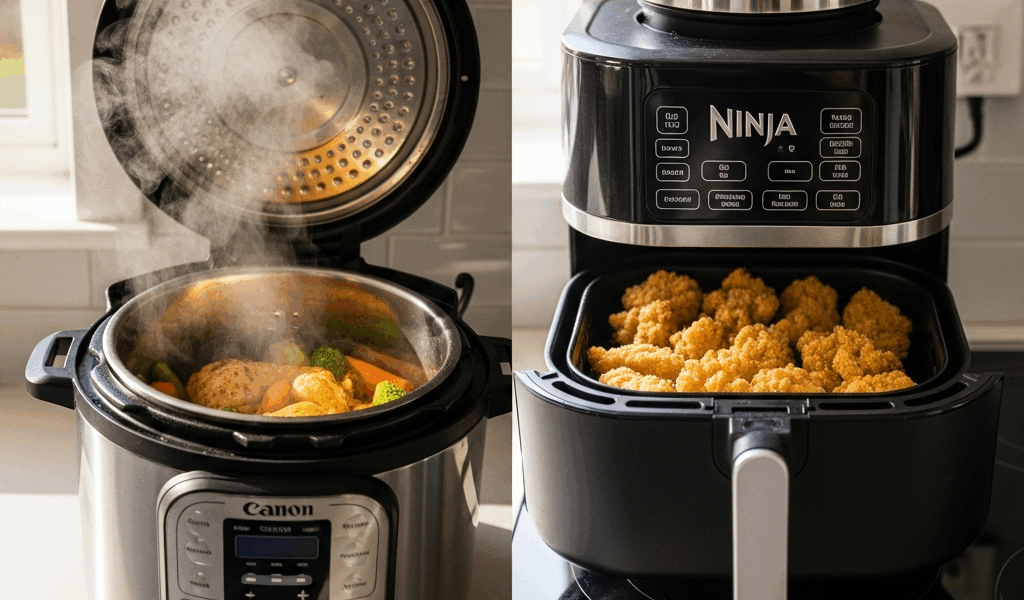
The instant pot vs ninja foodi debate got weird fast with all the spec-sheet noise flying around. So here’s the answer before we go any further: get the Instant Pot if you mostly want a pressure cooker and slow cooker that just works. Get the Ninja Foodi if you want to pressure cook and air fry in the same pot — at least if you have the counter space to back that up.
This article includes affiliate links. We may earn a commission at no extra cost to you.
Our Top Picks
This section includes affiliate links. We may earn a commission at no extra cost to you.
Instant Pot Duo 7-in-1 Pressure Cooker
Pressure cooker, slow cooker, rice cooker, 7-in-1
$109.99
Check Price on AmazonThat’s the whole thing. Everything below is just evidence for that call.
As someone who has cooked on both of these machines long enough to have genuinely strong opinions, I learned everything there is to know about what separates them. Not side-by-side lab testing — actual weeknight dinners, meal preps, and the occasional “it’s 6pm and I forgot to defrost the chicken” panic sessions. The Instant Pot Duo 7-in-1 has lived on my counter for years. I bought a Ninja Foodi OL601 to compare directly. After a few months of switching between them, the conclusions got pretty clear. Today, I will share it all with you.
Most comparison articles refuse to pick a winner. They bury you in spec tables and end with “it really depends on your needs.” Not useful. Your needs are real.
Pressure Cooking and Slow Cooking Head to Head
This is the core use case. Most people buying either of these want to cook dried beans from scratch, braise a pot roast without babysitting it, or get a whole chicken done in under an hour. Both machines do this. They don’t do it equally well.
But what is the Instant Pot Duo 7-in-1, really? In essence, it’s a multi-cooker built around a reliable pressure cooking core. But it’s much more than that — it’s a machine that has been refined through years of real-world use, and that refinement shows. It wins on pressure cooking and slow cooking. Not by a dramatic margin in terms of finished food quality — a pot roast out of both machines will taste like pot roast. The win is in reliability and simplicity. The Instant Pot seals consistently. The lid mechanism is something you learn once and never think about again. After hundreds of cooks, I’ve had exactly two seal failures. Both were my fault.
The Ninja Foodi OL601 is a larger, heavier machine — two lids, the pressure lid and the TenderCrisp lid — and that complexity adds real friction. Pressure cooking results are solid, but the learning curve is steeper. The sealing gasket is less forgiving if you’re rushing, and the whole experience feels less dialed-in for pure pressure cooking. Capable machine. Just not as clean.
For slow cooking specifically, the Instant Pot is the clearer winner. It maintains temperature more consistently. Behaves more like a traditional slow cooker. The Ninja Foodi’s slow cook mode runs hotter than most recipes expect — I scorched a lentil soup on the Foodi the first time I used that setting. Didn’t see that coming. Don’t make my mistake.
Air Frying and Crisping — Where Ninja Foodi Pulls Ahead
Quick note before I keep going. — because this is the real reason the Ninja Foodi exists.
The TenderCrisp lid is what separates the Foodi from everything else. You pressure cook your chicken thighs with aromatics until they’re cooked through and tender, then you flip down the TenderCrisp lid and run the air fry function for eight to ten minutes. The skin goes from pale and flabby to genuinely crispy. Not oven-roasted crispy — air fryer crispy. It works.
Stunned by how well that transition works the first time you do it, you’ll immediately start thinking about everything else it changes. Ribs with a lacquered bark. Pork shoulder that actually has a crust. Whole wings that don’t need a second appliance. The TenderCrisp function runs at up to 400°F and the results hold up every time. That’s what makes the Foodi endearing to us multi-cooker people.
Now, the Instant Pot does sell an air fryer lid attachment — separate purchase, around $50 to $70 — and it technically works. I’m apparently someone who keeps unnecessary kitchen accessories, and that lid attachment worked for me while the airflow never quite matched what the Foodi produces. It sits awkwardly. Requires you to store and swap a second lid. The results are fine. Fine is the ceiling. The Foodi’s TenderCrisp is the real thing; the Instant Pot attachment is a workaround.
If you regularly cook proteins where crisping matters — chicken thighs, duck legs, pork belly, wings — the Ninja Foodi is the better machine and it’s not particularly close. If you mostly cook soups, stews, beans, and grains, that crisping advantage is just weight you don’t need to carry.
Size, Price, and Counter Space Reality Check
This is where a lot of people talk themselves into the wrong purchase.
The Instant Pot Duo 7-in-1 in the 6-quart size runs roughly $80 to $100 most of the time. Occasionally dips lower during sales. Physically compact — about 13 inches tall, 12 inches across. Fits easily in an apartment kitchen, stores in a cabinet without serious reorganization, and doesn’t dominate a counter. I’ve had mine tucked between a toaster and the wall for three years.
The Ninja Foodi OL601 runs closer to $200 to $250 and is physically a different category of object. Tall. The TenderCrisp lid hinges up and adds significant height, so you need clearance above it when it’s running. Larger footprint. Heavier. In a galley kitchen or smaller apartment setup, this is a real constraint — not an abstract one.
Here’s the honest version: if you have 18 or more inches of dedicated counter space and reasonable overhead clearance, the Foodi works fine as a permanent fixture. If you’re pulling appliances in and out of cabinets or doing the stacking game, the Foodi gets annoying fast. The Instant Pot lives on the counter and stays out of the way.
The $100 to $150 price difference is also real. You’re paying for the integrated air fryer — and if you actually use it, the value is there, because you’re replacing two appliances. If you were never going to buy a standalone air fryer anyway, you’re paying a significant premium for a feature that doesn’t improve your cooking. Simple as that.
- Instant Pot Duo 7-in-1 (6qt): roughly $80–$100, compact, lighter
- Ninja Foodi OL601 (8qt): roughly $200–$250, taller, heavier, larger footprint
- Air fryer lid attachment for Instant Pot adds $50–$70 but is a noticeably weaker experience
Who Should Buy Which One — Final Verdict
Two profiles. Pick the one that describes you.
Buy the Instant Pot
You cook soups, stews, beans, grains, and braised meats. You want a pressure cooker that’s consistent and low-maintenance. You live in an apartment or have limited counter space. Crispy chicken skin isn’t something you lose sleep over. You want to spend under $100 and you want the learning curve short.
The Instant Pot Duo 7-in-1 is the right machine. Refined over years of production, enormous support community, and it will do exactly what you need without asking much from you. I’ve recommended it to at least a dozen people who cook like this. None of them have come back frustrated. Not one.
Buy the Ninja Foodi
You cook proteins regularly and want that crisped, roasted finish without firing up the oven or pulling out a second appliance. You already own — or were planning to buy — both a pressure cooker and an air fryer. You have counter space and overhead clearance. You’re comfortable spending $200-plus on a kitchen appliance that consolidates two functions into one.
The Ninja Foodi OL601 earns its price if you’re in this group. The TenderCrisp function is genuinely good, the pressure cooking is capable, and having one appliance handle both jobs is cleaner than the alternative. I use mine most on nights when I want pressure-cooked ribs with actual bark, or chicken thighs that don’t need finishing under the broiler afterward.
The Instant Pot wins for more people — most home cooks don’t need the crisping function badly enough to justify the cost and size premium. But the Ninja Foodi isn’t a gimmick. It’s the right tool for a specific cooking style, and if that’s you, it’s worth every dollar.



Leave a Reply